
June 2024 "Kuroshima Research Institute Training Activities" Participation Report
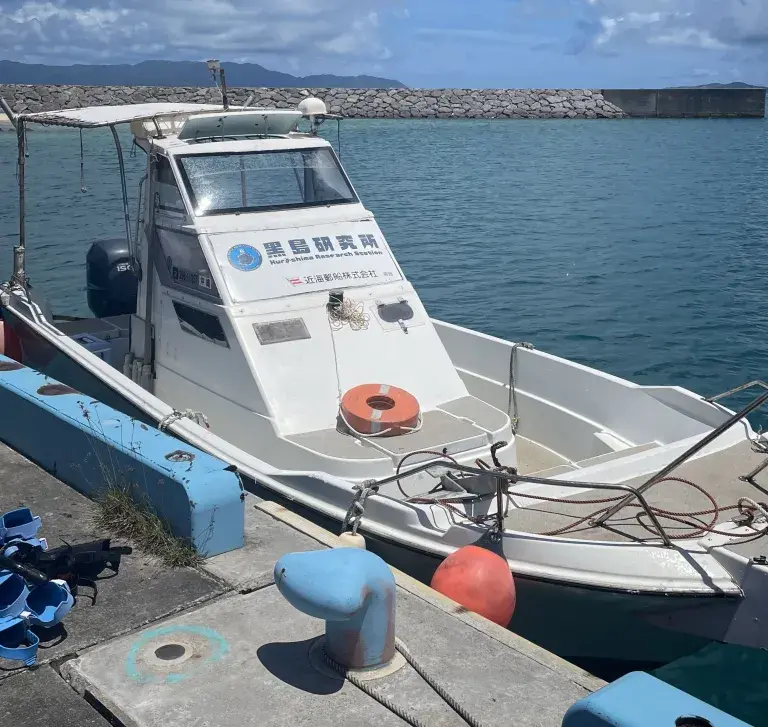
Our company conducts training activities to allow employees of our group companies to experience firsthand the activities of the Kuroshima Research Institute and the environment of Kuroshima. This year, the training was held in June 2024 for 3 nights and 4 days . This report contains reports from the participants. == Because there are no rivers, water is supplied from Iriomote Island via an underwater pipeline. Due to the lack of rivers, malaria outbreaks are less frequent compared to Iriomote Island and other areas, which is why settlement on Kuroshima Island has a long history.
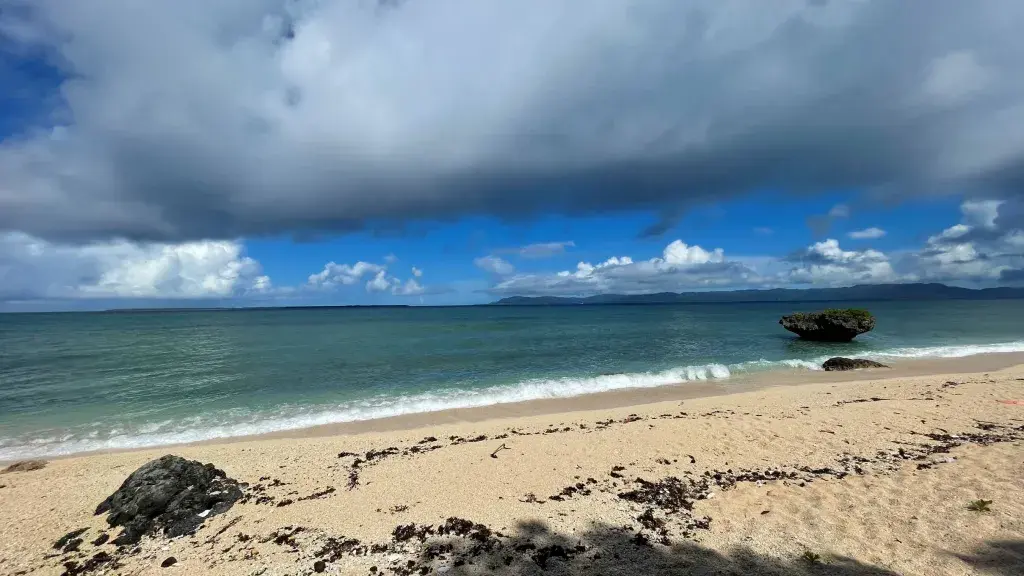
≪Confirmation of egg-laying the previous day≫
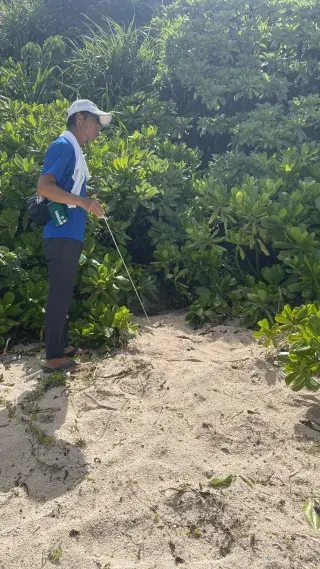
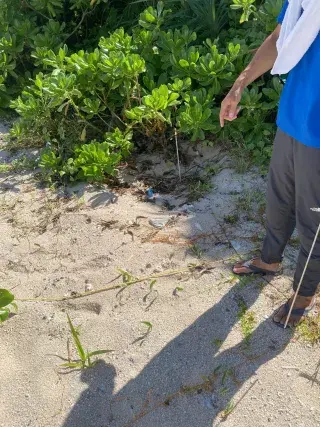
At Nishinohama, Kuroshima Research Institute trainee Maeda, along with Kuroshima Research Institute chief trainee Kameda, actually dug and confirmed the green sea turtle egg-laying site that he had confirmed the previous night. The approximate location was known, and even though Kameda used a thin metal rod to poke the sand on the beach and search for the areas where the sea turtle had compacted the sand with its feet, it took almost an hour from the start of digging until they found the eggs.
Eggs immediately after being laid are soft and indented to withstand the impact of being laid, but they gradually harden. Also, after more than a day has passed since egg-laying, the position of the embryo is determined, so if the egg is turned upside down, the embryo will die and will not be able to hatch.
≪Beach Cleanup≫
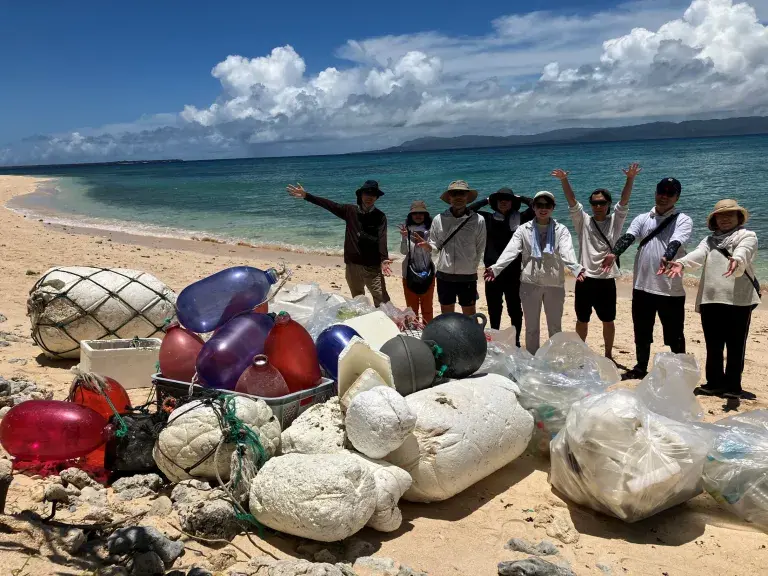
We conducted a cleanup at Nishinohama beach. Styrofoam, plastic bottles with Chinese and Korean labels, and various sizes of fishing gear were scattered around.
Since Kuroshima cannot process the waste, it will be collected in flexible container bags and transported to the port for transport to Ishigaki Island. We ended up with 5-6 flexible container bags in total, but we were only able to clean about one-third of Nishinohama beach.
Even plastic bottles that have drifted ashore cannot be disposed of as recyclable waste and must be treated as non-burnable waste. We don't know what ingredients foreign plastic bottles are made of, and they are often covered in sand and salt, so it seems difficult to burn them for energy.
In addition, the styrofoam and fishing gear showed significant deterioration due to ultraviolet rays, and
it seems difficult to completely remove the styrofoam that has broken down into small pieces from the sand, so we felt the need for regular beach cleanups.
≪Ranch Feeding Experience≫
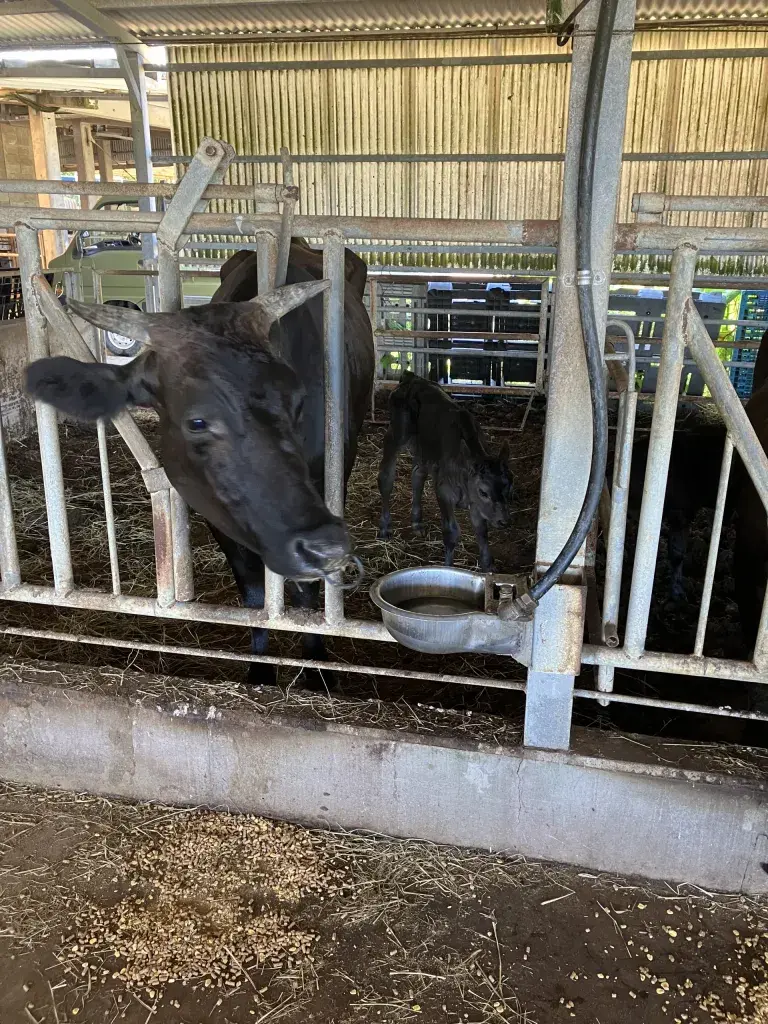
Kuroshima has a population of 221 people and raises 2,800 beef cattle. Calves are sold for around 500,000 yen each to fattening businesses on Ishigaki Island and outside the prefecture.
The island also has a proper auction house where auctions are held once every two months. The ranch where we had the feeding experience puts about 10 to 15 cows up for auction each time.
Ranches on the island mainly raise cows and calves, and since cows give birth to calves through artificial insemination, the bulls are sold when they are calves. Also, since cows can suffer from heatstroke just like humans, measures such as misting were being taken on the ranch.
≪Confirmation of Egg-Laying≫
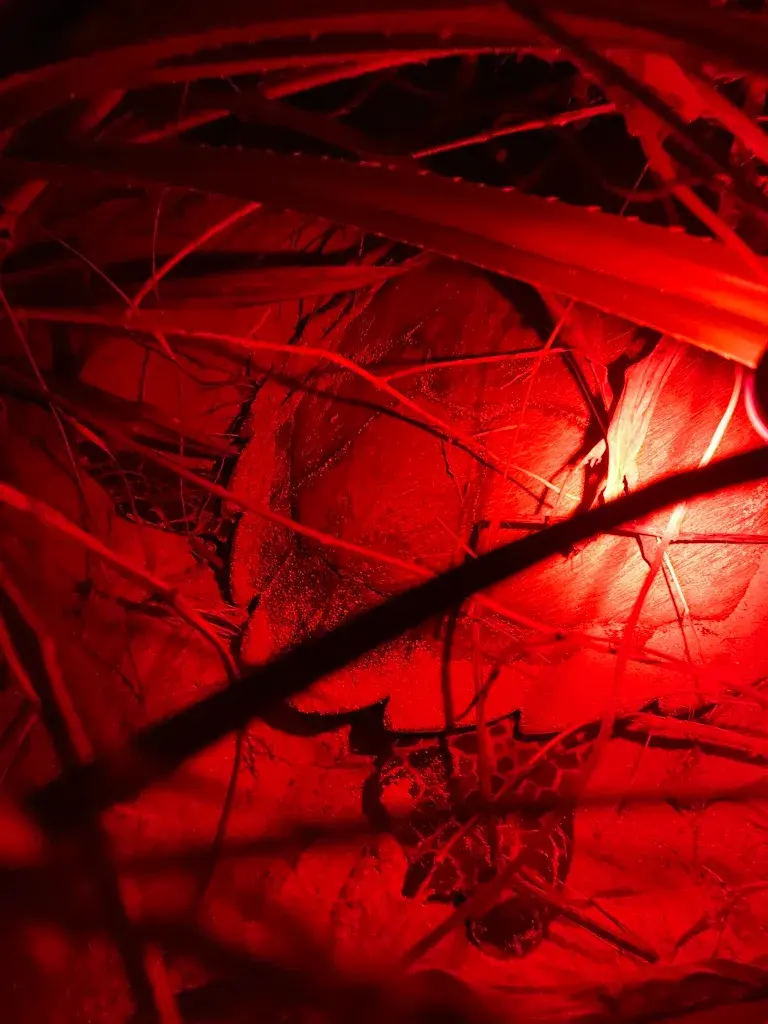
After dinner at the inn, under the guidance of Mr. Nakanishi from the Kuroshima Research Institute, we walked along the west beach to search for sea turtles coming ashore and laying eggs.
After walking for about 5 minutes, we found a trail extending from the sea. It is said that the type of sea turtle can be determined from the traces of coming ashore, and the one we found this time had alternating handprints, so we were able to determine that it was a hawksbill turtle, which is smaller than a green sea turtle. It is also said that different types of sea turtles have distinctive nesting locations, with hawksbill turtles often nesting in the bushes at the back of the beach, and green sea turtles often nesting just before the bushes at the back of the beach. It took about an hour from laying the eggs to filling the hole, so it is thought that it takes about two hours from coming ashore to returning to the sea.
The next day, Mr. Nakanishi told us that the tag on its leg indicated that it was a hawksbill turtle that had been tagged and released 20 years ago.
<Tagging and Release>
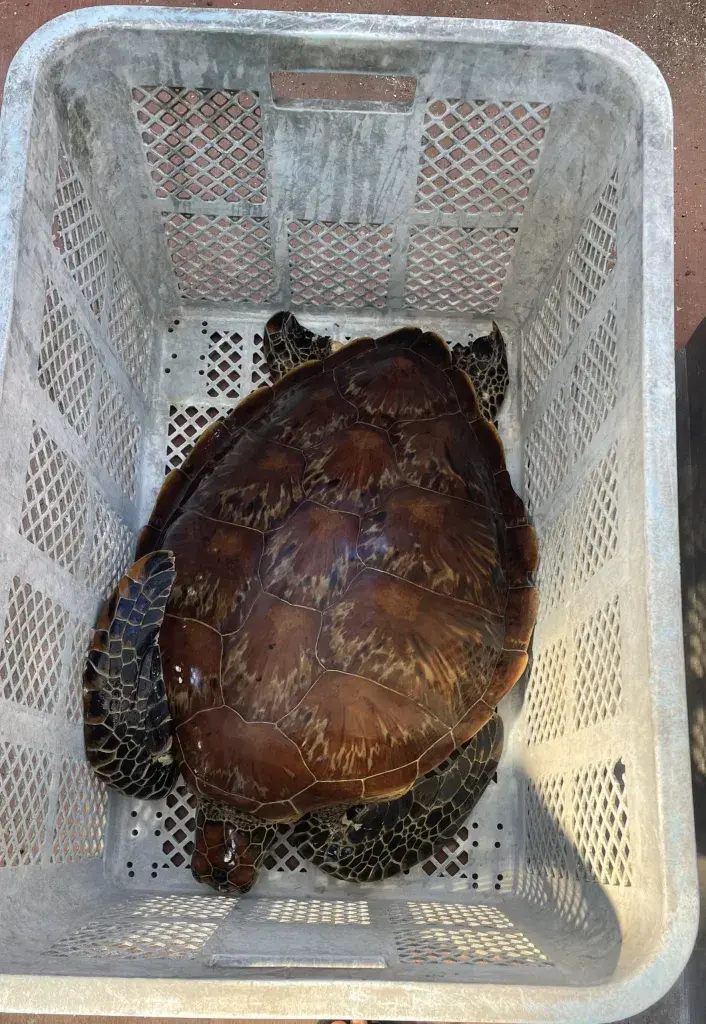
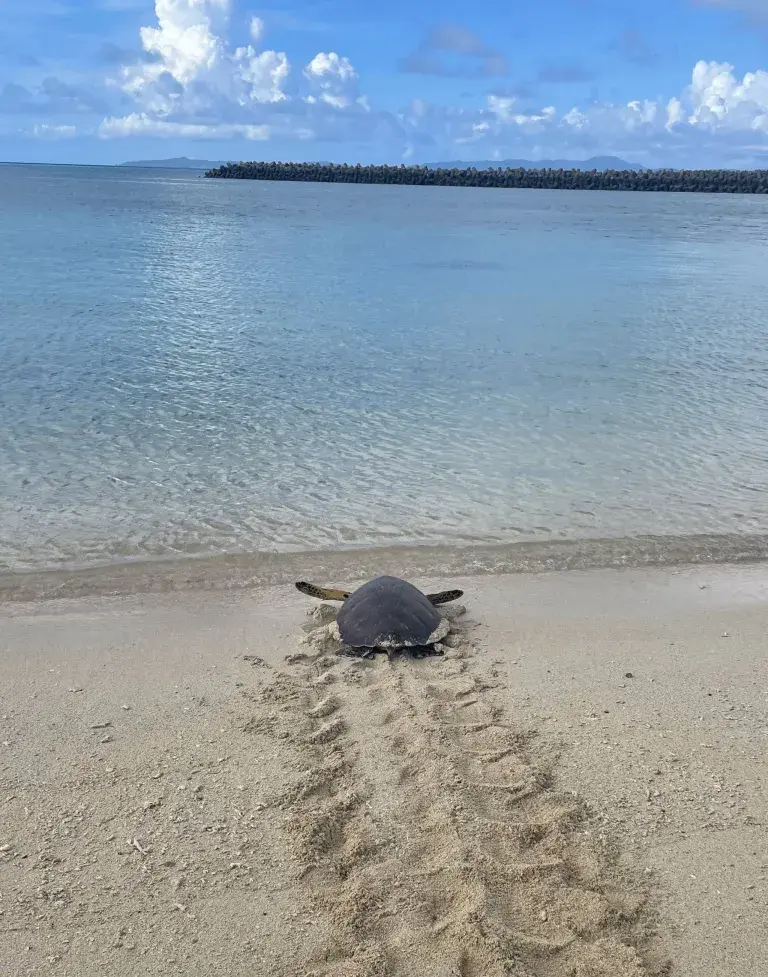
The weight, carapace length, and carapace width of a green sea turtle from the Kuroshima Research Institute were measured, two tagging tags were attached to its leg, and it was released from a beach near the harbor. This research will help us understand the growth of sea turtles, how far they travel and over what period of time, and whether they live in the sea where they grew up, like the hawksbill turtle the previous night.
≪Visiting the Tsushima Maru Memorial Museum≫
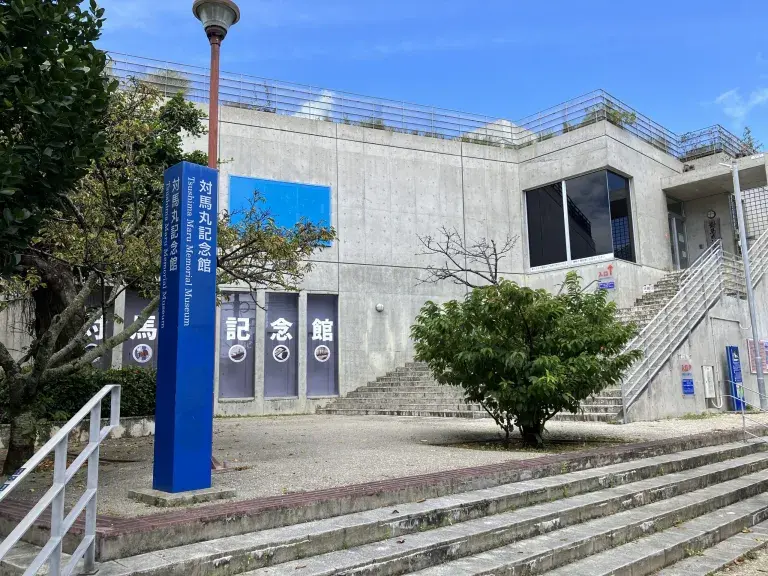
On the last day, we traveled to Naha and visited the Tsushima Maru Memorial Museum.
The Tsushima Maru was a cargo ship of Nippon Yusen Kaisha (NYK Line) and was requisitioned by the Japanese Army during the Pacific War. On August 22, 1944, while en route from Naha to Nagasaki with approximately 1,700 civilians and children on board as an evacuation ship, it was torpedoed by the US Navy submarine USS Bowfin and sank, resulting in numerous deaths, including the pilot. The exact number of people on board, the number of deaths, and the number of survivors are unknown. One of the reasons for this lack of information is that after the Tsushima Maru incident, Okinawa became a battlefield and homes and belongings were destroyed by fire, and the families who remained were also killed. The memorial museum displayed the events leading up to the sinking, US military records, and portraits of the victims.
[Impressions]
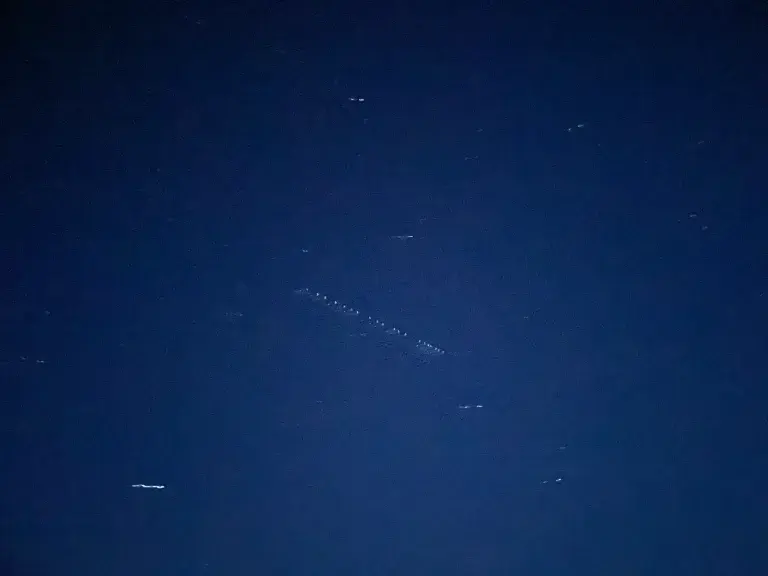
The habitat range of sea turtles varies depending on the species, but it has been changing due to the recent rise in seawater temperature. Previously, the Yaeyama Islands were the northern limit for hawksbill turtles and the Yaeyama Islands were the southern limit for loggerhead turtles, but gradually hawksbill turtles are being seen further north than the Yaeyama Islands, and the number of loggerhead turtles seen in the Yaeyama Islands is decreasing. It became clear that global warming is affecting not only extreme weather but also ecosystem distribution, and that it is not enough to simply maintain sandy beaches where sea turtles can lay their eggs. Also, Kuroshima has almost no lights and has been designated as Japan's first Dark Sky Reserve. In fact, we were able to see not only so many stars that it was difficult to distinguish constellations, but also shooting stars and the StarLink Train with the naked eye.
I was able to have experiences that I probably wouldn't have had on my own, such as watching sea turtles lay eggs, the crystal-clear waters of Kuroshima, the coral reefs I saw while snorkeling on the AKARI, and a starry sky like a planetarium. Participating in this training was a great opportunity to broaden my knowledge, and I would like to express my gratitude to the Kuroshima Research Institute for fully supporting this valuable experience. Through continued beach cleanups and regular support for the Kuroshima Research Institute, KYK will give back to the sea, and I hope that this will lead each employee to become more aware of global warming and GHG reduction, and to consider the direction KYK should take.

- Kuroshima Research Institute Report
- June 2024 "Kuroshima Research Institute Training Activities" Participation Report