
Hello from the beautiful island of Okinawa
Hello! (Women, say "Hiya!")
Sorry!
Our Tokyo/Osaka/Okinawa route delivers a variety of goods to the people of Okinawa Prefecture, from food and daily necessities to construction materials and machinery. Its history dates back to 1972, and next year will mark 50 years. Here in Okinawa, where we have a long relationship, there are customs (events) that cannot be experienced on the mainland, and we would like to introduce one of them to you.


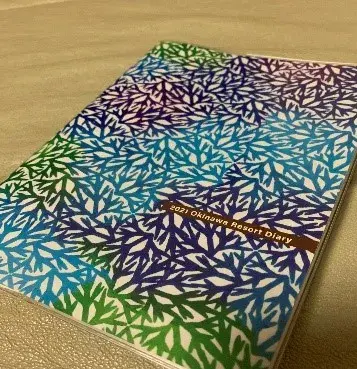
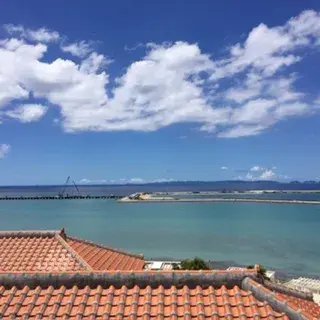
Okinawa Prefecture is an island prefecture located about 1,500 kilometers from Tokyo, consisting of 363 islands, both inhabited and uninhabited. The entire prefecture is in the subtropics, so it enjoys a warm climate all year round. An important item for living in the prefecture is a notebook called the "Citizen's Notebook" or "Kariyushi Notebook." Okinawans place great importance on their "customs (events)," which are often held according to the lunar calendar. For this reason, this notebook records the lunar calendar and also includes explanations of customs unique to Okinawa.
It also contains information about bus routes and taxis, sightseeing, disaster prevention, and even includes illustrations of what to wear each month. For my husband and I, who are new to living in Okinawa, this is a very reassuring item that combines a guidebook and information about daily life in one volume.
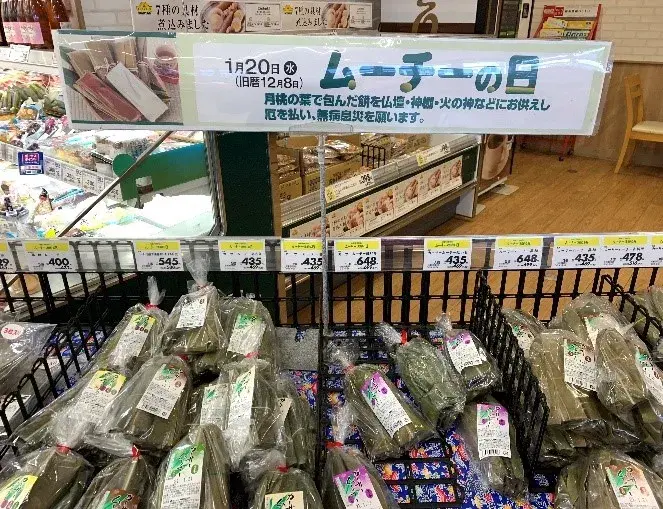
I've digressed, but I'd like to introduce a major New Year's event that took place just recently: Muchi (Demon Mochi). Muchi is a traditional event that takes place
every year on December 8th of the lunar calendar, where steamed rice cakes wrapped in shell ginger (kasa) or Kuba leaves are offered to Buddhist altars, household shrines, and Hinukan (the god of fire) as prayers for good health and safety. Shell ginger leaves have antibacterial and insect repellent properties, so they are popular in Okinawa as a medicinal herb to ward off evil spirits, and because they are very easy to obtain, they are also called "Shell Ginger Oni Mochi (kasa muchi)."
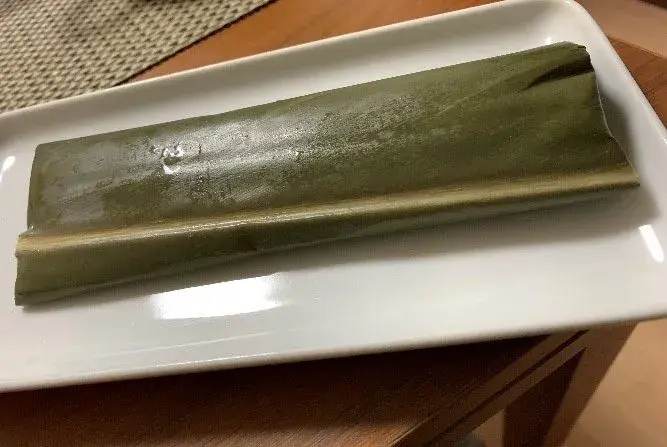
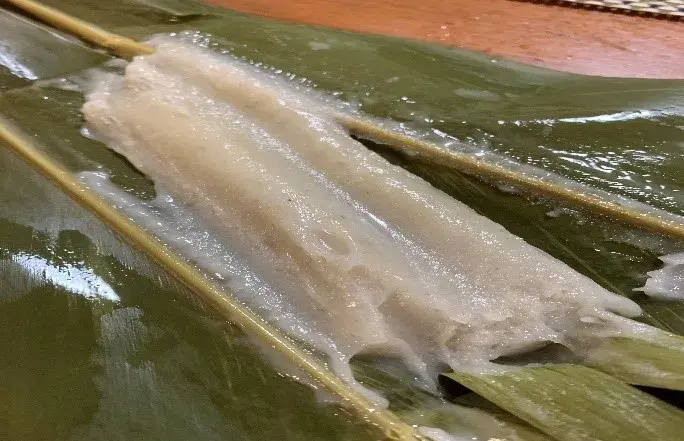
Apparently, each household makes different flavors of mochi, such as taimo, brown sugar, purple sweet potato, and chocolate, but ours purchased the taimo and brown sugar flavor from a local supermarket. When I opened the bag, I was hit with the distinctive scent of shell ginger leaves. It had a cinnamon-like aroma, perhaps. I imagined a spicy flavor from the scent, but the taimo tasted like it had a slightly sweeter addition to the original sweetness of the mochi. The brown sugar flavor also had just the right amount of brown sugar flavor, which was also great.
I ate it all up in no time.
However, I found it a little difficult to eat because it was so chewy, but it turns out that the more the rice cake stretches, the more it represents a prayer for health and longevity. After the New Year, ingredients such as rice flour and shell ginger leaves appear on the shelves of supermarkets, and it was a valuable experience to get a glimpse of one of the customs that the people of Okinawa cherish.
Although I mentioned earlier that Okinawa has a warm climate all year round, in January strong north to northeast winds blow, and there are days when it feels chilly. It's surprisingly cold, and the coldest period is also known as "Muchi (demon rice cake) Bisa (cold)."

In addition to these events, there are many different events held almost every month, but last year many events were canceled or postponed to prevent the spread of COVID-19. We hope that the day will soon come when we can freely experience Okinawa's culture and enjoy its beautiful scenery surrounded by the beautiful ocean. We are also looking forward to seeing many people visit Okinawa.
Macchoibindo!



- Financial News
- Hello from the beautiful island of Okinawa