
[Yuunomori Volunteer] From the sea to the mountains, and back to the sea
What is "Yuunomori"?
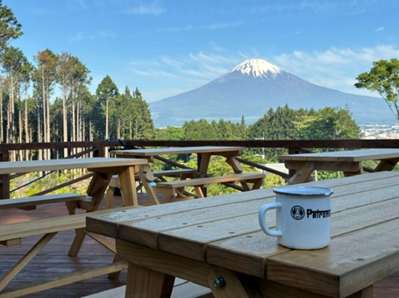
"Are you a sea person or a mountain person?"—to this common question, as an employee of a shipping company closely associated with the sea, I should probably answer "sea person." But can we truly say we are unrelated to the mountains? With this question in mind, I headed to Gotemba City, Shizuoka Prefecture, this past May. My destination was "Yu-no-mori," the base for the "Yu-no-mori Project," a forest maintenance project carried out by Nippon Yusen in collaboration with Gotemba City. Located at an altitude of approximately 500m on the eastern foot of the sacred Mount Fuji, this place allows group employees and local residents to learn about forest issues and sustainability through tree planting activities and environmental education. This time, I participated in a two-day, one-night tree planting volunteer program along with five other people from our company
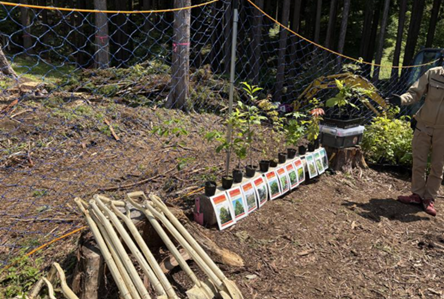
A planting method called "densely mixed planting"
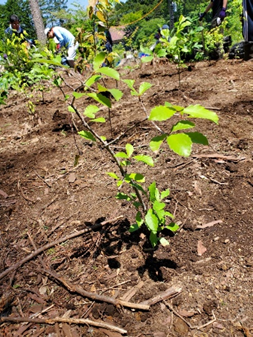
For planting, we used a technique called "dense mixed planting." This involves mixing and planting 11 different types of seedlings, including sawtooth oak, zelkova, and Japanese camellia, to create a stable forest that reflects natural biodiversity. Deciduous trees grow quickly but require a lot of sunlight, while evergreen trees grow slowly but can thrive with less sunlight. By combining the two, a stable forest that is resistant to pests and diseases and can continue for generations is formed
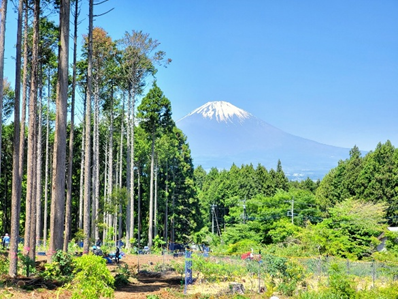
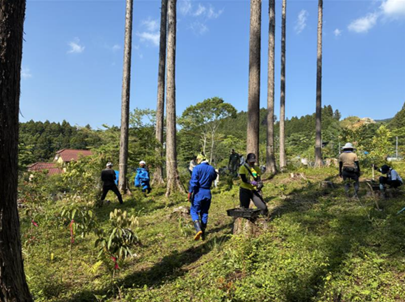
On the first day, I joined in the afternoon, with a quota of 300 saplings to plant in three hours. Among the participants were families, and several children were also involved. Before we started planting, the children had already become close enough to call each other by their first names. Once the work began, without anyone having to assign roles, everyone naturally divided up the tasks: watering the saplings, transporting them, digging holes, and planting them. Working together, everyone, including the children, completed planting all 300 saplings. The pleasant activity in the crisp air left us with a wonderful sense of accomplishment
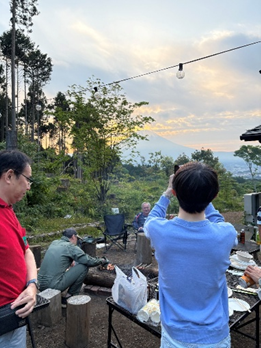
Bonfire, Mount Fuji, and friends
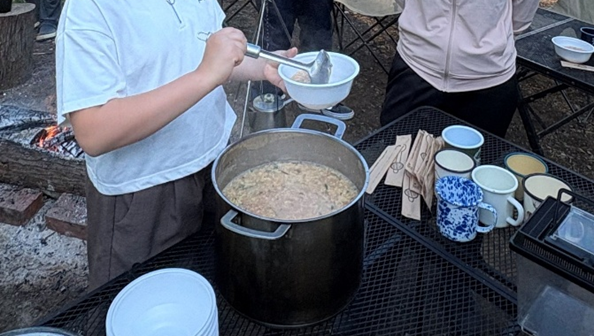
As dusk fell and we finished planting, we had a BBQ over a bonfire for dinner. With the silhouette of Mount Fuji in the background, we gathered around the grilling meat and vegetables and deepened our friendship with the members of the Nippon Yusen Group. The next morning, I woke up to the cheerful voices of children outside, who were already spontaneously helping to serve breakfast. Breakfast that day was rice porridge made with partially polished brown rice. It was served with salmon and egg, and Korean seaweed was available as a topping, and it was so delicious that I had seconds four times. On the second day, I only participated in the morning. The quota was 300 saplings, but the cooperative work we had cultivated on the first day was a breeze. We successfully completed the quota again that day. We left the site at lunchtime, but the volunteer work continued until the afternoon, and a total of 1,200 saplings took root in the soil of "Yu no Mori" over these two days
Significance of planting
Trees absorb CO₂ through photosynthesis, "fixing" carbon. Kinkai Yusen has obtained ISO 14001 certification and is actively promoting environmental measures. Ship operations involve fuel consumption, but carbon sequestration through planting helps to reduce this. The "mountains" and the "sea" are interconnected, and the health of forests ultimately leads to the richness of the sea
Through this experience, we, as employees of a shipping company, have come to realize that we too have a close relationship with the mountains. "Sea person or mountain person?"—we hope you will enjoy pondering this question, which has no easy answer
(To be implemented in May 2026)
Return to list
- Financial News
- [Yuunomori Volunteer] From the sea to the mountains, and back to the sea